
Most dental sales pitches hide the ugly truth. They show you a perfect smile while dancing around the price tag until you’re already in the chair. Paying for your new smile shouldn’t feel like a secret society initiation. When comparing the cost of full arch dental implants vs high-end dentures 2026, you’re not just buying porcelain or acrylic teeth. You’re buying the ability to eat steak without fear. It’s an investment in your facial structure and long-term health. But the price gap between these two options is wide enough to drive a truck through. You need to know if the extra zeros on the bill actually translate to a better life.
Choosing between these two paths defines your daily comfort for the next decade. Standard dentures often fail the lifestyle test because they slip, slide, and require messy adhesives. High-end dentures attempt to fix this with better materials and a more realistic look. However, they still don’t address bone loss in your jaw. Full arch implants involve surgical precision and permanent hardware. You’ll spend more upfront, but you might save your jawbone from collapsing over time. Let’s break down the actual numbers for this year.
What is the actual cost of full arch dental implants vs high-end dentures 2026?
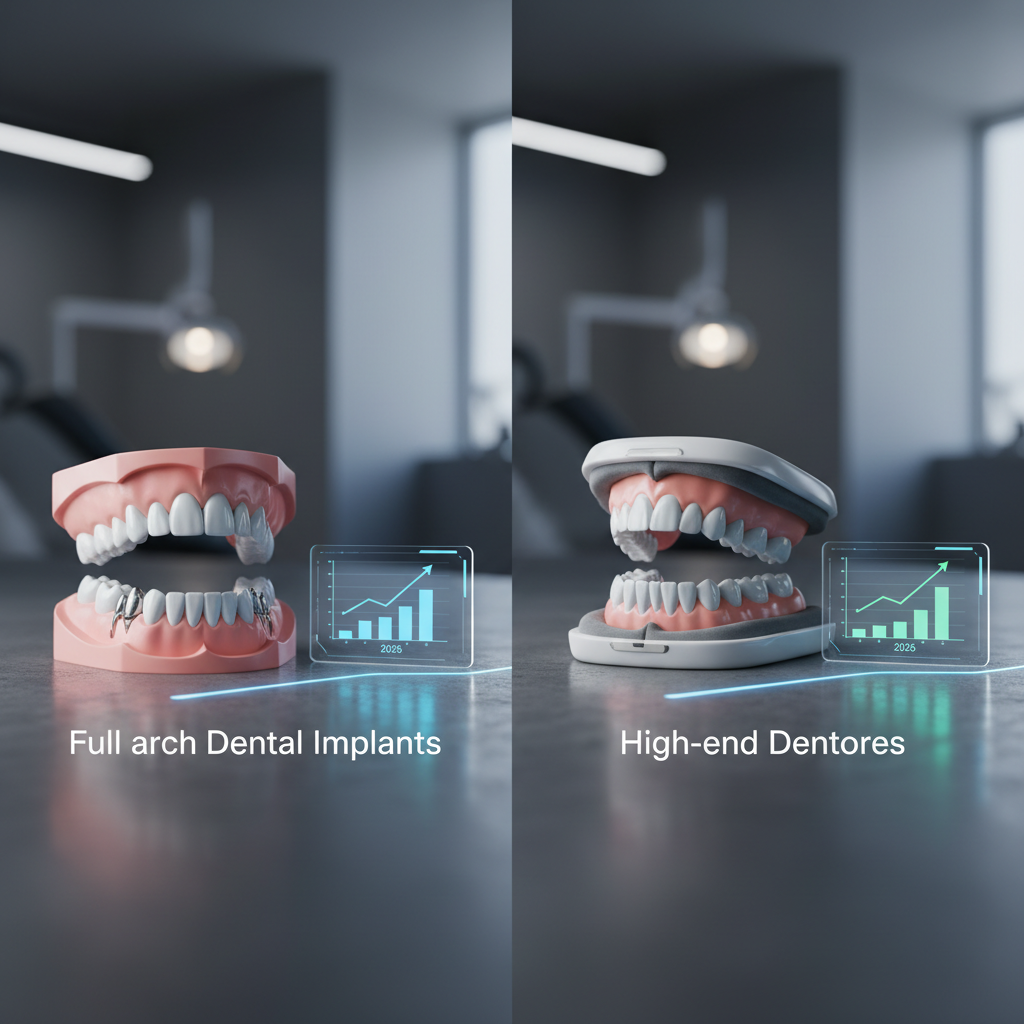
Prices have shifted significantly. The cost of full arch dental implants vs high-end dentures 2026 reflects new material costs and specialized labor. You can expect to pay anywhere from $14,000 to $36,000 per arch for fixed implant solutions. This range covers the surgery, the titanium posts, and the final custom bridge. It’s a steep entry price. But the stability is unmatched. You won’t find better security for your smile anywhere else on the market.
High-end dentures offer a more digestible price point for many families. These aren’t your grandfather’s floppy plastic teeth. Quality cosmetic dentures generally run between $3,500 and $6,500 per arch. They use premium heat-cured acrylics and multi-layered porcelain teeth. They look stunning. But they still sit on top of your gums rather than in your bone. You’ll likely need to replace them every five to seven years as your jaw shape changes.
Comparing these costs requires a long view of your financial health. A single arch of All-on-4 dental implants might cost $25,000 today. If that arch lasts twenty years, your annual cost is relatively low. Contrast that with high-end dentures. You pay $5,000 now, another $5,500 in six years, and another $6,000 six years after that. Don’t forget the cost of relines and adhesives. The gap starts to close when you look at the twenty-year horizon.
What factors influence the price of full mouth restorations this year?
Material quality dictates everything. Higher prices usually mean you’re getting Zirconia instead of basic acrylic. Zirconia is nearly indestructible and resists staining much better than plastic. It looks more like natural enamel. It feels heavier. But it also requires more expensive milling equipment and technician time. Your choice of material is the biggest lever for the final bill.
Your biological foundation matters too. Many patients require bone grafting before an implant can even be placed. This adds $300 to $1,500 to your total per site. If your jaw has thinned out from years of missing teeth, the surgeon must rebuild it. Dentures don’t require this surgery. That’s why they seem cheaper. But ignoring bone loss leads to a sunken facial appearance that dentures can’t truly fix.
Location impacts your wallet. A clinic in a major metropolitan hub will charge more than a rural practice. Overhead costs like rent and specialized staff salaries are baked into your quote. You might find a better deal by driving two hours. Just ensure the follow-up care is accessible. You don’t want to travel across the country for a simple adjustment.
- Digital Imaging: High-definition CT scans are now standard for implant planning.
- Anesthesia: IV sedation keeps you comfortable but adds $500 to $1,000 to the session.
- Surgical Guides: 3D-printed guides ensure the implants go in exactly the right spot.
Are high-end dentures a viable alternative to full arch implants?
Quality matters for comfort. High-end dentures use pressure-injected resins that fit much tighter than economy options. This reduces the friction that causes painful mouth sores. You get a customized look that matches your facial proportions. They’re beautiful. They’re also removable for easy cleaning. Some people prefer that simplicity over the complexity of surgery.
But the limitations remain. Even the best denture only provides about 20 percent of the biting force of natural teeth. You’ll still struggle with tough meats or crunchy vegetables. The roof of your mouth is usually covered by a plastic plate. This can dull your sense of taste. It can also interfere with your speech patterns. It’s a compromise between cost and function.
Maintenance is a daily chore. You must remove them every night. You have to soak them in cleaning solutions. Over time, your jawbone will shrink because it no longer holds tooth roots. This shrinkage causes the denture to become loose. You’ll need a reline every year or two. These small costs add up over a decade of wear.
If you’re healthy enough for surgery, implants are the gold standard. They stimulate the bone. They feel like a part of your body. You brush them just like your old teeth. You never have to worry about them falling out during a dinner party. That peace of mind is what you’re really paying for.
How does the long-term ROI compare between these two tooth replacement options?
Look at the math. The cost of full arch dental implants vs high-end dentures 2026 is a tale of two different balance sheets. With implants, you front-load the expenses. You pay for the precision, the surgery, and the high-grade materials. After that, your costs drop significantly. You pay for regular cleanings and maybe a replacement screw once in a blue moon. It’s a predictable financial path.
Dentures are a subscription model for your mouth. The initial buy-in is lower. This makes them accessible for people on a fixed income. But you aren’t done paying. You’ll pay for professional cleanings. You’ll pay for soft relines. Eventually, you’ll pay for a completely new set. If you live another twenty years, you might spend more on dentures than you would have on one set of implants.
There is also the cost of your time. Denture patients often visit the dentist more frequently for adjustments. Pressure spots can develop overnight. A loose denture can cause embarrassing social moments. You can’t put a price on the confidence of a fixed smile. When you factor in lifestyle value, implants often win the ROI battle handily.
- Initial Phase: Implants are 5-7x more expensive than high-end dentures.
- 5-Year Mark: Dentures require relining: Implants require only standard hygiene.
- 10-Year Mark: Dentures often need full replacement: Implants remain stable.
- 20-Year Mark: Total denture costs approach 50% of the original implant price.
Which payment and financing options are available in 2026?
Don’t let the sticker price scare you. Most dental offices don’t expect you to walk in with $30,000 in cash. Third-party financing is the lifeblood of modern restorative dentistry. Companies like CareCredit or Proceed Finance offer extended terms. You can often break a massive bill into manageable monthly payments. Some plans even offer interest-free periods if you pay within a year.
Insurance coverage is slowly improving. It’s rare for a plan to cover the cost of full arch dental implants vs high-end dentures 2026 in its entirety. But many now provide a flat allowance. They might pay $1,500 to $2,500 toward the total cost. Every bit helps. Check if your plan covers the crown portion but not the implant post. Sometimes you can maximize benefits by splitting treatment across two calendar years.
Health Savings Accounts (HSA) and Flexible Spending Accounts (FSA) are your best friends here. You can use pre-tax dollars to pay for your surgery. This effectively gives you a 20 to 30 percent discount depending on your tax bracket. It’s one of the smartest ways to handle a large medical expense. Plan your contributions a year in advance to maximize the benefit.
What medical criteria determine your candidacy for each treatment?
Health comes before the wallet. Not everyone is a fit for surgery. If you have uncontrolled diabetes or heart disease, dental implants might be too risky. Your body needs to be able to heal and fuse with the titanium. Smoking is another big hurdle. It significantly increases the risk of implant failure. You’ll need to be honest with your surgeon about your lifestyle.
Bone density is the silent dealbreaker. Implants need a solid foundation to anchor. If you’ve been missing teeth for a decade, your bone might be too thin. Zygomatic implants are an alternative for those with severe bone loss in the upper jaw. They anchor into the cheekbones instead. They cost more, but they avoid the need for massive bone grafts. They’re a specialized solution for complex cases.
Dentures are the fallback for almost everyone. Even if your health is poor, a well-made denture can give you back your smile. It’s a non-invasive process. No needles. No cutting. Just impressions and fittings. If you’re looking for the path of least resistance, dentures are it. Just be prepared for the functional trade-offs that come with them.
How do you choose between these two major dental investments?
Start with a consultation. You can’t make this decision based on a blog post alone. You need a 3D CBCT scan to see what’s happening under your gums. A qualified prosthodontist will show you your bone levels. They can give you a firm quote based on your specific anatomy. Ask for an all-in price that includes extractions and temporary teeth.
Consider your age and activity level. If you’re 50 and active, the cost of full arch dental implants vs high-end dentures 2026 justifies itself. You have decades of eating and speaking ahead of you. If you’re 85 and have mobility issues, a high-end denture might be the more practical choice. It’s easier to clean and involves less physical stress. Base your choice on the life you want to lead.
Trust your gut when meeting the dental team. Cheap implants are a recipe for disaster. If a price seems too good to be true, the clinic is likely cutting corners on materials or sterilisation. Look for a surgeon who uses reputable implant brands like Straumann or Nobel Biocare. These companies have decades of data backing their products. Your health is not the place to look for a bargain-basement deal.
Modern implant technology has a success rate of over 95 percent when performed by an experienced specialist. It’s the only tooth replacement method that actively prevents the deterioration of your jawbone.
Secure your dental future with a clear financial plan
Buying a new smile is a major life event. The cost of full arch dental implants vs high-end dentures 2026 represents a choice between luxury and permanence. You now know that implants require a bigger initial check but offer a more stable future. High-end dentures give you a beautiful look today with lower upfront costs and higher long-term maintenance. Both can restore your confidence.
Your next step is to get a professional evaluation. Don’t wait until your remaining teeth fail and leave you in an emergency. Proactive planning gives you the time to save money and explore financing options. You deserve a smile that stays in place second you laugh. Take control of your oral health today. Your future self will thank you every time you bite into an apple.
Frequently Asked Questions About Dental Costs 2026
Is the All-on-4 procedure cheaper than individual implants?
Yes. All-on-4 uses only four posts to support an entire row of teeth. This reduces the amount of hardware and the amount of surgery required. It’s significantly more affordable than replacing each tooth with a single implant and crown. Most patients find it’s the most cost-effective way to get a permanent, non-removable smile.
Will Medicare pay for my full arch implants?
Generally, no. Traditional Medicare does not cover dental implants or dentures. However, some Medicare Advantage plans offer dental riders that may provide a small benefit. You should also check if any part of the procedure can be billed to your medical insurance. For instance, if the tooth loss is due to a medical condition or trauma, you might get partial coverage.
How long do high-end dentures actually last?
A well-made high-end denture usually lasts between five and eight years. The materials are durable, but your mouth is constantly changing. As your bone recedes, the fit becomes poor. You can reline them to fix the fit temporarily, but eventually, the teeth wear down and the base becomes brittle. Replacing them on schedule prevents damage to your gums.
What is the biggest risk of choosing dentures over implants?
The biggest risk is progressive bone resorption. Without the stimulation of an implant post, your jawbone naturally dissolves over time. This changes your facial structure, leading to wrinkles and a collapsed look around the mouth. It also makes it harder to fit dentures in the future. Implants are the only way to stop this biological process from occurring.