
Your steak is cold. You’ve spent twenty minutes trying to chew a single piece of meat while your traditional dentures slide around your mouth. This isn’t just about food. It’s about the deep frustration of losing the function of your own body. You’re likely weighing the hidden pros and cons of fixed hybrid dentures vs removable overdentures because you’re tired of the compromise. You want to know if a permanent fix is worth the price or if a removable snap-on system offers the flexibility your lifestyle demands.
What are the structural differences between fixed hybrids and overdentures?
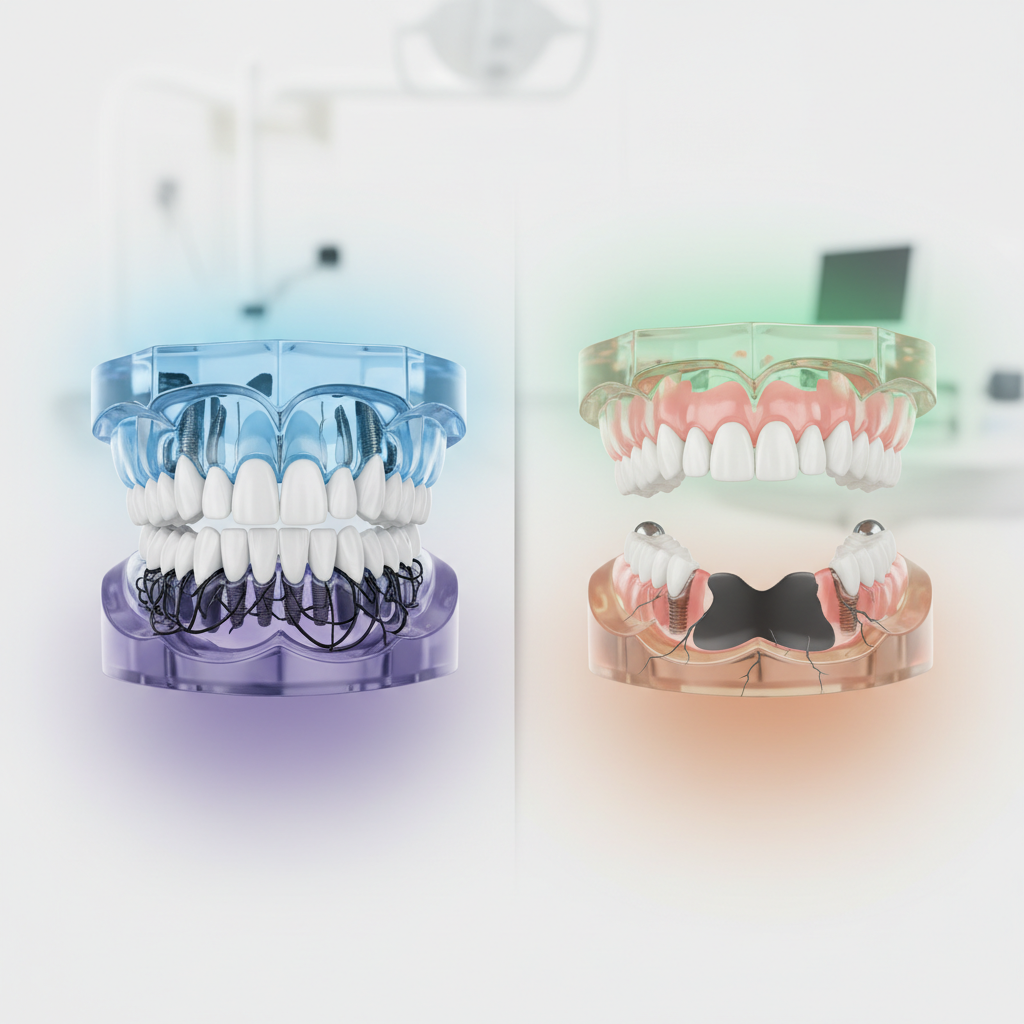
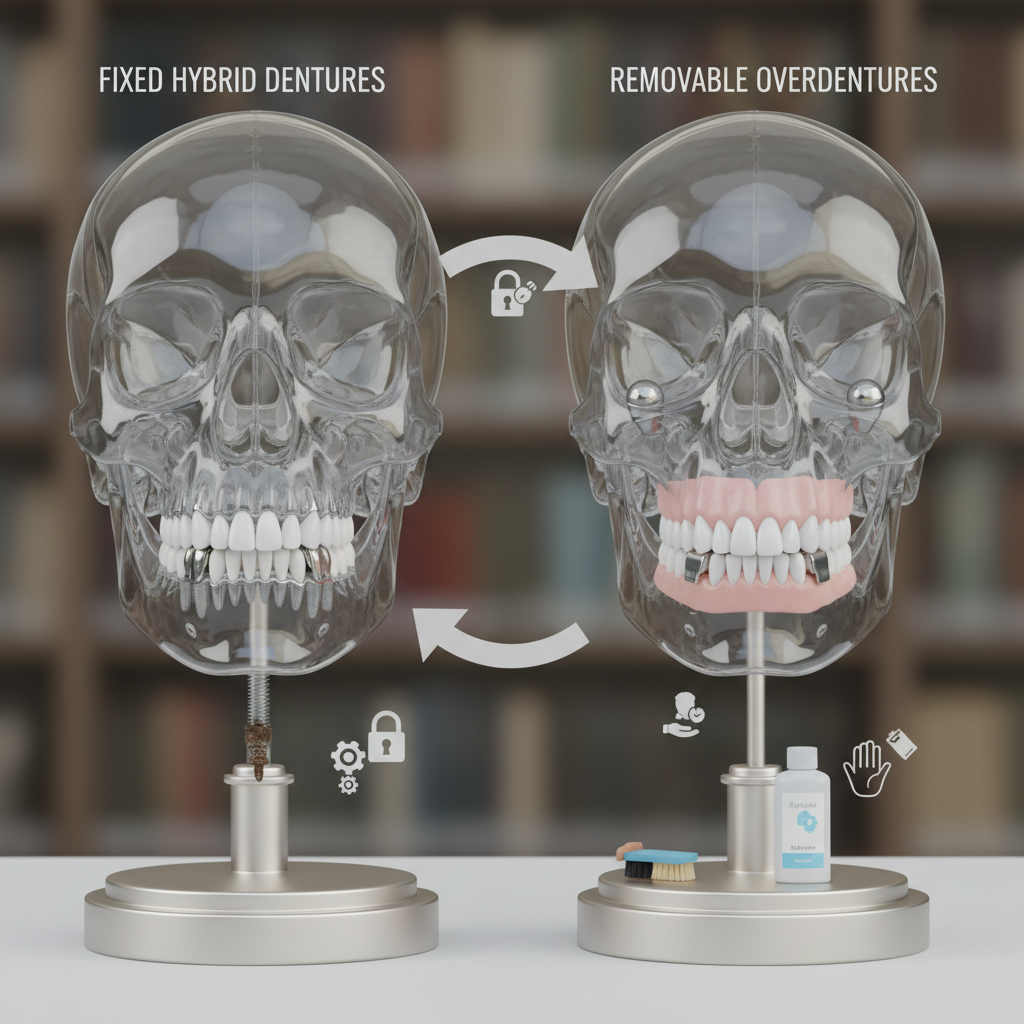
Your mouth is a complex mechanical system. Every bite you take exerts massive pressure on your jawbone. Fixed hybrid dentures are bolted directly into your jaw using four to six dental implants. They do not move. You treat them like natural teeth. They stay in your mouth around the clock. Your dentist is the only one who can remove them during your annual deep cleaning.
Removable overdentures rely on a different mechanical connection. They snap onto a series of implants using attachments that look like tiny ball-and-socket joints or a metal bar. You click them in during the morning. You pop them out at night. This choice affects how your mouth feels and how your brain perceives your new smile.
Bone health is a critical factor here. Fixed options distribute biting forces more like natural teeth. This stimulation keeps your jawbone from shrinking as quickly as it would with standard dentures. Overdentures also stop bone loss but they don’t provide the same level of consistent mechanical stimulation. You have to decide if you want something that feels like a prosthetic or something that feels like a part of your skull.
How do the hidden pros and cons of fixed hybrid dentures vs removable overdentures impact your daily diet?
Food is life. Many patients discover the hidden pros and cons of fixed hybrid dentures vs removable overdentures the moment the waiter brings the appetizer. Fixed hybrid dentures restore about ninety percent of your original biting force. You can eat carrots. You can eat crunchy apples. You can tear through a thick crust of sourdough bread without worrying about your teeth flipping up at the back. It’s a total lifestyle shift.
Removable overdentures are a significant upgrade over traditional floating dentures. They won’t fall out while you’re talking. But they still have limits. When you bite into something particularly sticky or tough, you might feel a slight shift in the base. This tiny movement reminds you that the teeth are removable. Most patients find they can eat far more than they used to, but they still cut their steak into smaller pieces.
Taste is a major variable. Many upper overdentures still require a plate that covers a portion of your palate to ensure stability. This plastic covering can dull your ability to taste food and sense temperature. Fixed hybrids usually leave the roof of your mouth completely open. You taste your wine better. You feel the heat of your coffee instantly. It’s a sensory detail people often overlook until it’s too late.
Why does hygiene look so different for these two implant solutions?
Cleaning is a chore. Nobody likes it. If you choose a removable overdenture, your hygiene routine is straightforward. You snap the teeth out. You brush the gums around the metal posts. You soak the denture in a cleaning solution overnight. It’s easy because you can see everything you’re doing.
Fixed hybrids require more discipline. Since they don’t come out, you have to clean underneath the bridge while it’s still in your mouth. You’ll need specialized tools like water flossers and super-floss threads. Food can sometimes get caught in the small gap between the acrylic and your gum line. If you’re lazy about cleaning, you risk peri-implantitis. This is a fancy word for an infection that can cause your expensive implants to fail.
Think about your dexterity. If you have arthritis or limited hand movement, the removable option might be safer. Trying to thread floss under a fixed bridge when your fingers don’t cooperate is a recipe for frustration. However, if you want to wake up with teeth in your mouth and never think about a soaking jar again, the fixed route wins. It’s a trade-off between the ease of the task and the frequency of the maintenance.
Which option offers the most natural facial aesthetics in 2026?
Your face shape changes when you lose teeth. The bone recedes and your lips start to collapse inward. When evaluating the hidden pros and cons of fixed hybrid dentures vs removable overdentures, look at your lip support. Fixed hybrids are often designed to be slim and streamlined. They look incredible when you smile. But because they’re fixed, they can’t always provide the bulk needed to push your upper lip out to its original position.
Overdentures use a larger acrylic base. This extra material isn’t just for show. It acts as a scaffold for your facial muscles. If you’ve suffered significant bone loss, a removable overdenture can actually make you look younger than a fixed bridge would. It fills in the hollow spaces around your mouth. It smooths out the fine lines that appear when the jaw bone thins.
But there is a catch. The snap attachments on overdentures take up physical space. This means the teeth themselves might have to be positioned slightly differently than you’d prefer. Fixed hybrids give the dentist more artistic freedom to place each tooth exactly where it looks most natural. You have to balance the fullness of your face against the perfect alignment of your smile.
Are there long term repair costs you need to consider?
Implants are an investment. They’re meant to last decades. The teeth on top of them are a different story. The hidden pros and cons of fixed hybrid dentures vs removable overdentures include the reality of wear and tear. Fixed hybrids are tough. Because they’re bolted in, they don’t experience the friction of being snapped on and off every day. However, if you chip a tooth on a fixed bridge, you have to go to the dentist to get the whole unit removed and sent to a lab.
Overdentures have parts that wear out by design. The nylon O-rings or clips inside the denture lose their grip over time. You’ll notice the snap feels a bit mushy after six to twelve months. Replacing these inserts is cheap and fast. Usually, your dentist can do it in ten minutes while you sit in the chair. It’s a recurring cost, but it’s a predictable one.
You also have to think about the denture base. The acrylic used in these prosthetics can stain or crack over five to seven years. With a removable overdenture, getting a replacement made is a relatively simple process. A fixed hybrid is often more complex to recreate because the fit must be microscopic and perfect to avoid putting stress on the implants. You’re paying for precision.
What is the real world price difference between these systems?
Money matters. Fixed hybrid dentures are almost always the more expensive choice. You pay for more implants. You pay for more complex laboratory work. You pay for a higher level of clinical expertise during the surgery and the fitting phase. In 2026, the gap between a high-end removable system and a fixed hybrid can be several thousand dollars per jaw.
Overdentures are the budget-friendly way to get implant stability. You can often get a functional result with just two implants on the bottom jaw. This cuts your surgery costs in half. It also reduces the need for expensive bone grafting procedures. If your jaw bone is thin, a removable overdenture might be the only option that doesn’t require a six-month bone-growing journey.
But don’t just look at the upfront bill. Consider the value of your time. If you choose a cheaper removable option and find yourself frustrated with the slight movement, you’ll end up spending more to upgrade later. Many patients find that the hidden cost of a removable system is the psychological weight of feeling like they still wear dentures. You have to put a price on your own confidence.
How do you choose between fixed and removable implant teeth?
You need to sit down with your 3D scans. Your dentist will look at the density of your bone and the shape of your ridge. If you have flat gums, a fixed hybrid might be difficult to keep clean. If you have plenty of bone and a high smile line that shows your gums, a fixed bridge will look and feel like a miracle.
Questions you should ask yourself include:
- Do I mind taking my teeth out at night?
- How much time am I willing to spend flossing every morning?
- Is restoring my full biting force my number one priority?
- Does my facial structure need extra support from a thicker denture base?
- Am I prepared for the maintenance costs of replacing snap-on attachments?
Your lifestyle is the ultimate deciding factor. A marathon runner or a public speaker might find the absolute security of a fixed bridge vital. Someone who prioritizes easy hygiene and a lower price point might find a high-quality overdenture to be the perfect balance. There is no wrong answer. There is only the answer that lets you eat a meal without thinking about your teeth.
Frequently Asked Questions About Implant Dentures
Can I change from an overdenture to a fixed hybrid later?
Yes. In many cases, you can start with a removable overdenture and upgrade to a fixed hybrid. This often requires adding more implants to support the increased biting force of a fixed bridge. It’s a great way to spread out the cost of your dental restoration over several years.
Is the surgery for fixed hybrid dentures painful?
Modern dental surgery is highly controlled. Most patients experience soreness for a few days but report that it’s much easier than they expected. Using 3D surgical guides makes the process fast and accurate. You’ll be given local anesthesia and often sedation to ensure you don’t feel a thing during the procedure.
How long do fixed hybrid dentures last compared to overdentures?
The titanium implants can last a lifetime with proper care. The prosthetic teeth usually last seven to ten years before they need to be refreshed or replaced. Fixed hybrids tend to last slightly longer because there are no moving parts to wear down, but they require stricter hygiene to prevent gum disease.
Will people be able to tell I am wearing dentures?
No. Both fixed hybrids and high-end overdentures are designed to look like natural teeth and gums. The materials used in 2026 have incredible translucency and color matching. Your friends and family will likely see a beautiful smile rather than a dental prosthetic.
Does food get stuck under a fixed hybrid denture?
It can. Because there is a tiny space for your gums to breathe under the bridge, small seeds or fibers can occasionally get trapped. Using a water flosser or a specialized interdental brush solves this problem quickly. Most patients find this a minor inconvenience compared to the benefits of permanent teeth.
Take Command of Your Dental Health Strategy
Your path to a new smile starts with a clear understanding of your own goals. Don’t let the fear of surgery or the complexity of the hidden pros and cons of fixed hybrid dentures vs removable overdentures stop you from making a move. Every day you wait is another day of compromised nutrition and fading confidence.
Contact a qualified implant specialist today. Ask specifically for a 3D assessment of your jaw bone and a breakdown of both fixed and removable options. Take the time to touch the models and see the attachments for yourself. Your new smile is a permanent part of your identity. Choose the system that lets you live your life without limits.